
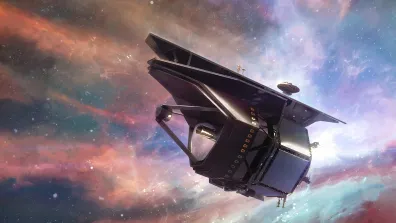
While space-based astronomy is bringing new insights into our universe every day, there are still places that remain shrouded in mystery. Among these are the very cold objects visible in the far-infrared portion of the spectrum, like newly forming planets or the interstellar medium, but invisible to the naked eye. It is precisely to better understand how these systems evolve that NASA has selected PRIMA (PRobe far-Infrared Mission for Astrophysics).
The mission’s European partners, coordinated from CNES by Olivier La Marle, Head of Universe Sciences, and Florent Canourgues, Project Lead for phase A of the French contribution and PRIMAger Project Manager, are supplying two complementary instruments, one of which is PRIMAger, an innovative cooled thermal camera.
Why observe the universe in the far-infrared?
Olivier La Marle: Observing at these wavelengths allows us to study celestial bodies like planetary protosystems or very distant ancient galaxies, which are undetectable with conventional infrared instruments and so call for custom sensors that France knows how to design and operate. Sensing such extremely cold objects requires special expertise, notably in designing a camera capable of operating in an extremely harsh environment at around –272°C, as well as generating as little heat itself as possible.
What makes France a leader in this field of observation?
Olivier La Marle: France’s expertise in infrared technology dates back to the 1990s with the European Infrared Space Observatory (ISO). This spacecraft was carrying ISOCAM, the very first infrared camera designed by the French atomic energy and alternative energies commission CEA. Since then, our nation has specialized in this spectral domain, contributing to several flagship missions, notably with the High Frequency Instrument (HFI) on the European Planck satellite, the Near Infrared Spectro Photometer (NISP) on the Euclid telescope, and the Mid-InfraRed Instrument (MIRI) on the James Webb Space Telescope (JWST).
Florent Canourgues: France is one of a small circle of nations with research laboratories specializing in this space-observation domain. Within this community, the LAM astrophysics laboratory in Marseille and CEA are actively involved in this mission. We also have several world-renowned French scientists working in this field. It’s this solid expertise that enabled us to put together a robust contribution for the PRIMA project submitted in response to NASA’s AO.
What else gave PRIMA an edge over rival proposals for NASA’s Explorers Program?
Florent Canourgues: The PRIMA project is a great example of successful international collaboration. For instance, an international science team defines the observatory’s science goals and expected performance. A team of institutes and space agencies, led by the Jet Propulsion Laboratory (JPL) in the United States, is also contributing to the satellite’s design and architecture. This collaborative dimension was a priority selection criterion for NASA.
The PRIMAger instrument reflects this approach, since we’re working with two French institutes (CEA and LAM) in close collaboration with the Dutch space agency SRON to develop the detector arrays and focal planes, and with Cardiff University on developing the filters.
What are PRIMA’s science goals?
Olivier La Marle: One of PRIMA’s main missions will be to observe an era of the universe that’s still poorly understood, when it was between 5 and 10 billion years old [current estimates put its age at 13.8 billion years]. This period, also known as the intermediate universe, was the golden age of star formation. It’s precisely PRIMA’s ability to survey this era that sets it apart from its forerunners.
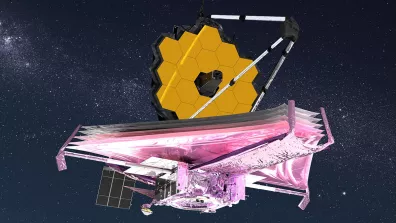
Like Herschel and the James Webb Space Telescope (JWST) before it, PRIMA will probe the interstellar and cold intergalactic medium in the far-infrared. But where JWST senses frequencies between 2 and 28 microns, PRIMA’s increased sensitivity to temperatures close to absolute zero—i.e., –273.15°C—make it an ideal candidate for detecting wavelengths of a few tens to several hundred microns.
What are the next milestones for PRIMAger?
Florent Canourgues: Being selected is just the first phase of a tightly coordinated timeline. In the years ahead, alongside the design and fabrication phases, we’ll be conceiving a ground test unit to replicate near-space conditions. The context of the PRIMA mission makes this a particularly ambitious task: we have to make sure that each intrinsic component of the thermal camera is able to withstand the extreme conditions of space and that its thermal radiation is controlled to eliminate all sources of interference when imaging. Lastly, we’ll be conducting experiments in the lab to replicate the signals the camera will be sensing in orbit, to guarantee that PRIMAger is capable of delivering high-quality images in the most extreme conditions of outer space.
PRIMA mission goals
Currently planned for launch in 2033, the PRIMA space telescope mission will pursue three main goals:
- Characterize the evolution of stellar dust inside ancient galaxies to determine the origin of the peak of star formation 10 billion years ago
- Gain a clearer understanding of how protoplanetary disks form, notably by studying water transport
- Study how galaxies and their supermassive black holes have co-evolved over cosmic time
Like its illustrious predecessors, this future infrared telescope is set to take science into previously unexplored territories.