
CNES (Centre National d’Etudes Spatiales) is the French space agency, tasked with:
- informing the government’s national space strategy
- executing this strategy
- deploying public policies that require the space sector’s support (defence, land management, agriculture, health, telecommunications, natural disasters, etc.)
- fostering the nation’s space ecosystem
-
What we do
As one of the world’s major space powers and a leading contributor to Europe’s space policy, our nation is deploying an ambitious strategy guided by four key goals pursued by CNES.
CNES is a government agency overseen jointly by the Ministry of the Economy and Finance, the Ministry for Armed Forces and the Ministry for Higher Education and Research.
CNES by the numbers
- 1961: inception
- 160 science projects and missions
- 2,350 employees
- 4 centres in Paris, Toulouse and Kourou (French Guiana)
- €3,029m in 2024, a budget of €45 per capita per year
“CNES’s ambition is to affirm and step up its efforts as a leading space player in Europe and on the world stage, while consolidating its role as a strategic advisor to the French government through its science and engineering excellence.”
- CNES Chairman & CEO

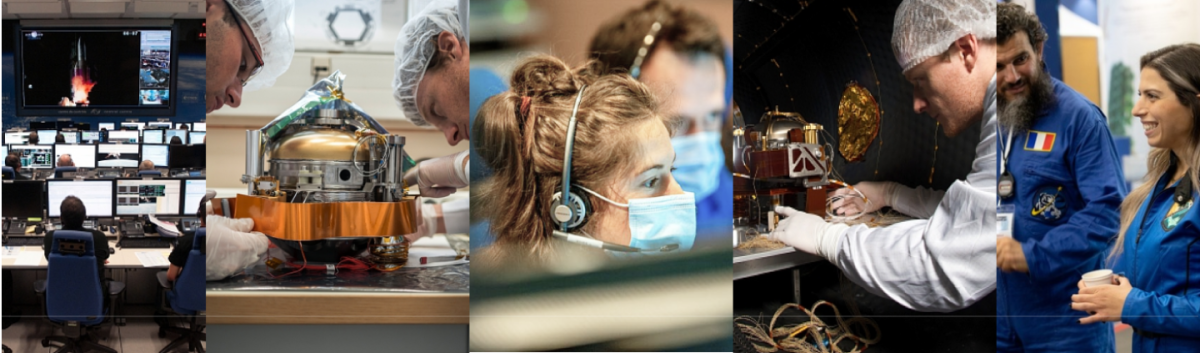
Steering France’s space programme
CNES is a programmatic agency, field centre and national space operator all in one.
As a programmatic agency, its role is to shape, plan and execute France’s space policy. It also offers foresight and strategic thinking, to drive continuous innovation. It represents France at the European Space Agency (ESA) and helps to make our nation’s voice heard at European Union level. It also keeps track of regulatory matters and of execution of the French Space Operations Act (FSOA). And it is the mainstay of space education and outreach in France.
CNES also has a field centre affording technical facilities. It makes available its resources and platforms to provide expertise, and works closely with industry to conceive and build satellites, launchers and future space technologies. It evaluates proposals and conducts projects in partnership with industry and research laboratories.
CNES is considered an operator of vital importance by the government, guaranteeing the effective operation of space missions from launch to control of satellites (positioning, orbital manoeuvres, etc.), these activities being identified as essential to the nation’s survival.
3 projects to follow in 2026
-
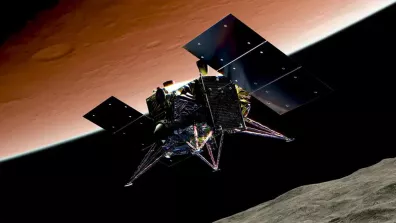
MMX
This exploration mission, led by Japan and to which France is contributing, will launch in October 2026 to study Mars’ two moons, Phobos and Deimos.
-
Epsilon
The mission of French ESA astronaut Sophie Adenot aboard the International Space Station (ISS), which began on 13 February 2026 and will last nine months.

-
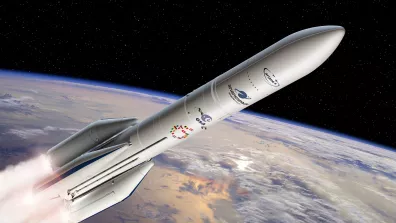
Ariane 6
2026 marks a year of major developments for Ariane 6: the first flight of the A64 configuration, equipped with four boosters, took place on 12 February, also marking the first flight of an Ariane 6 with a long fairing. The launcher will soon be equipped with the P160C motor.